
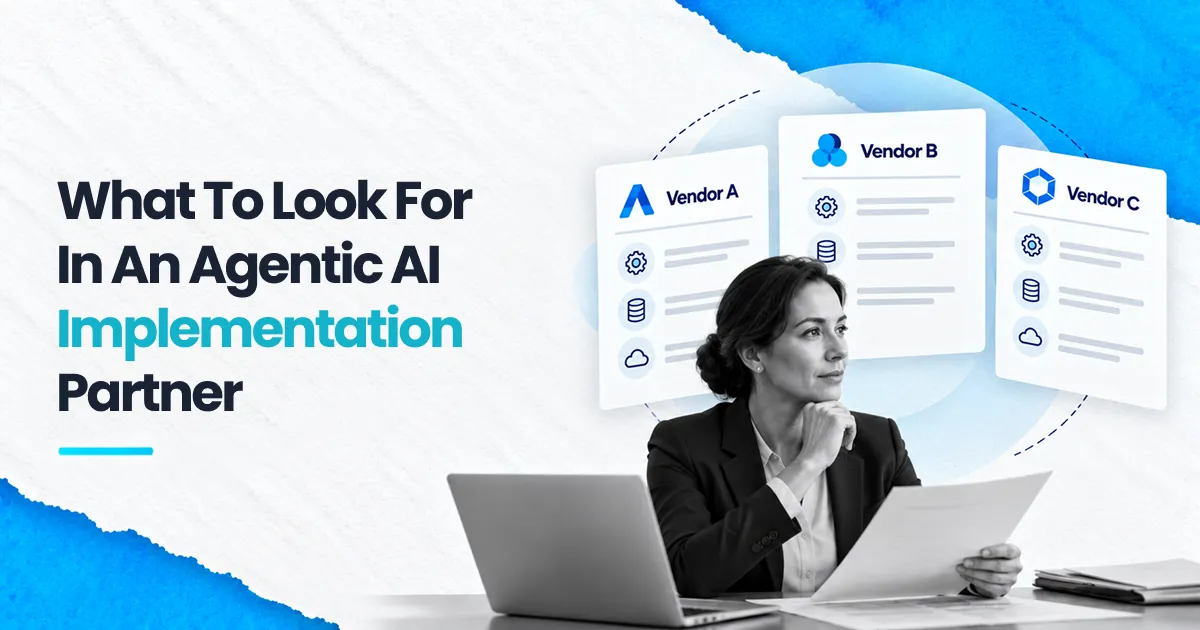
Three proposals, spread across the desk. The VP of Operations has read all of them twice and noticed something slightly absurd: they are describing the same thing. Same underlying model providers. Same architecture diagram with slightly different colours. Same slide, in all three decks, explaining what a large language model is to an audience that stopped needing that explanation two years ago.
Nothing in front of them helps make a decision. Which is a problem, because a decision is due Friday.
That is the state of the market, and it is why knowing what to look for in an agentic AI implementation partner now matters more than assessing the technology itself. The models have converged. What has not converged, at all, is the ability to run one of these systems inside a real enterprise with legacy integrations and customers who notice when something goes wrong.
Here is our position: platform expertise is table stakes. The genuine differentiator is whether a partner has ever had to make their system fail gracefully in a live enterprise environment, in front of real customers, with real consequences. Everybody can demo the success path. Very few have engineered the failure path, because you only learn to do that after it has gone badly once.
The market has a vocabulary problem, and Gartner named it
Gartner predicted in June 2025 that more than forty percent of agentic AI projects would be cancelled by the end of 2027, citing escalating costs, unclear business value, and inadequate risk controls. Note what is absent from that list. Model capability. Nobody is cancelling these programmes because the AI was not clever enough.
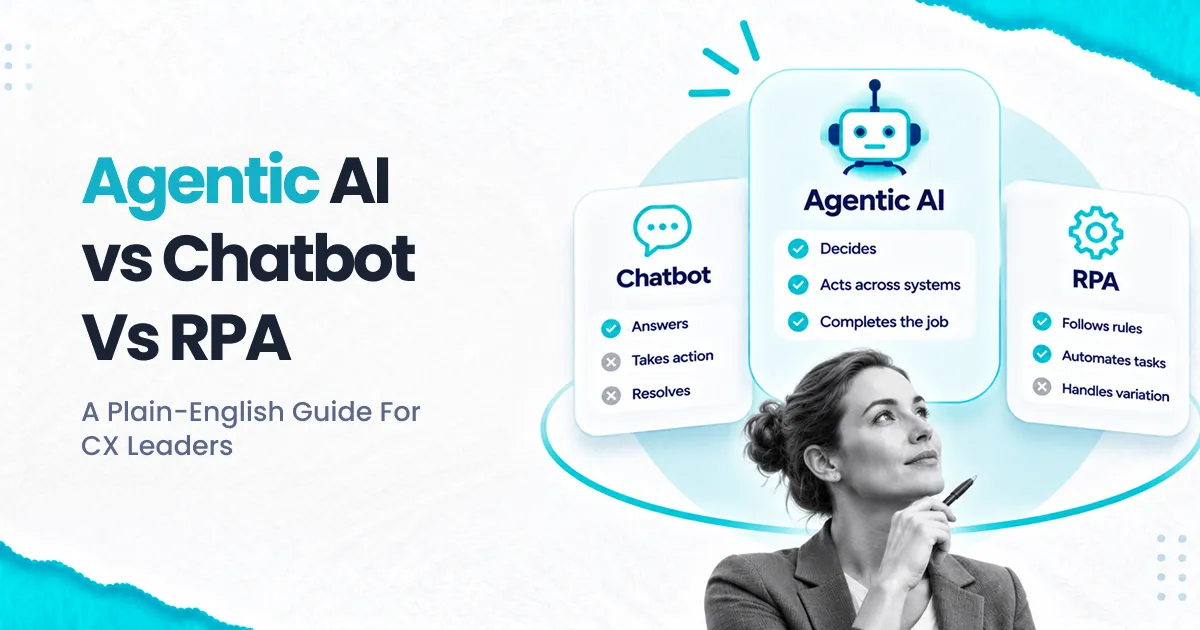
The same Gartner analysis flagged a related problem it labelled agent washing: vendors rebranding existing chatbots, robotic process automation, and assistant tooling as agentic without the underlying autonomy. Which explains the three identical proposals. When differentiation is hard to demonstrate, everybody describes the same stack in the same language, and procurement is left comparing typography.
Academic work points the same direction. A Berkeley-led study analysing why multi-agent language model systems fail found that the dominant failure modes were not model reasoning limits but specification problems, coordination breakdowns between components, and inadequate verification of outputs. Engineering and design failures, in other words.
So the evaluation question is not which partner has better technology. It is which partner has built the unglamorous scaffolding around it.
See how PAteam delivers agentic AI in production environments.

Judge the partner on the bad night, not the good day
A hospital is not assessed on a calm Tuesday morning ward round. It is assessed on what happens at three in the morning on the worst night of the winter, when the department is over capacity and two systems are down. That is when you find out whether the protocols were real or laminated.
Agentic AI is the same. Your system’s quality is defined by what it does when the customer’s request is unusual, the CRM times out, the knowledge base contradicts itself, or the confidence score sits right on the threshold. Not by what it does on the seventy percent of contacts that behave predictably.
This is what we mean by graceful failure, and it is a design discipline rather than a feature. It means the agent knows what it does not know. It means a timeout produces a clean handoff to a human with full context attached, not a cheerful non-answer to the customer. It means an ambiguous request gets escalated rather than resolved confidently and incorrectly.
The distinction matters commercially, because a confidently wrong agent is far more expensive than one that declines. A declined contact costs you an agent’s time. A wrong one costs you a customer, and sometimes a compliance conversation.
So when you sit with a shortlisted partner, spend most of the session on failure. Ask them to walk you through the last time one of their deployments got something materially wrong in production, what the customer experienced, how they found out, and what changed afterwards. A partner with real production history will have an answer and will be slightly uncomfortable telling it. A partner without one will pivot to accuracy statistics.
That single question separates the field faster than any technical assessment.
The five things that actually predict a successful deployment
Beyond failure design, these are the capabilities that separate partners who deliver from partners who launch.
What Exception-First design looks like in practice
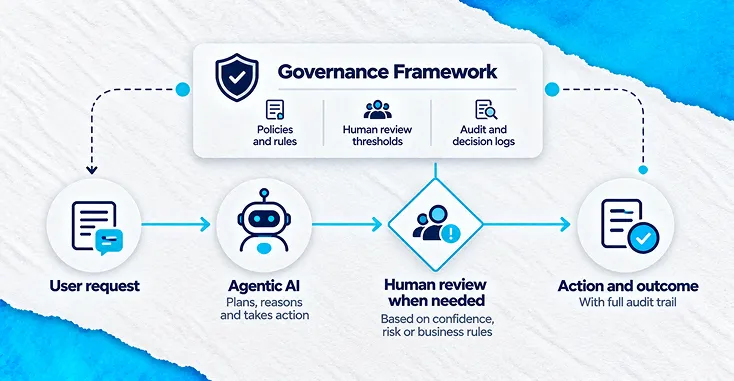
Most implementations design the resolution flow first and treat exceptions as a later work package. We build them together, in the same phase, and we call it Exception-First design because the exceptions get designed first when they are contested for time.
At Kirkendall Dwyer, a legal operations client, that discipline is why the deployment held. The work involved document intake at volume, integrated into Salesforce, with the agent handling classification and data extraction across formats that varied considerably. Legal document handling is unforgiving of confident errors, so the escalation logic and the human review thresholds were designed alongside the extraction logic rather than after it.
Document processing dropped from five to eight minutes down to one minute. The number we care about more is what happened afterwards: the operation scaled to support 117% caseload growth on only 43.8% labour cost growth. That gap is the whole business case, and it only exists because the system degrades safely when it hits something unfamiliar rather than pushing a bad output downstream.
Our step by step agentic AI contact center implementation runs through Discover, Design, Launch, Enable, Scale. Discover maps contact reasons by real volume including the awkward long tail, audits knowledge quality, and tests every integration point. Design covers resolution flow, escalation path, and governance in parallel. Launch deploys against a controlled contact segment and measures against a baseline before expanding. Enable transfers monitoring, runbooks, and review protocol so your team owns performance within about ninety days. Scale expands channels on a foundation that is already proven.
Across our CX engagements this consistently delivers containment rate improved by 10%, AHT reduced by 15%, and cost to serve reduced by 15%.
Learn how PAteam structures agentic AI delivery.
Our honest take: the partner should be arguing with your business case
Here is something that costs us deals occasionally.
If a prospective partner agrees with everything in your brief, that is not alignment. That is a sales posture, and you should read it as a risk.
We routinely tell clients during Discover that a portion of their intended scope should not be autonomous at all. Contact types that are emotionally sensitive, legally exposed, or dominated by genuine judgment produce modest containment gains and carry outsized reputational risk when the agent gets one wrong. Those belong in agent assist, at least to start.
We also push back when the business case rests on headcount reduction inside six months. The reliable early return from agentic AI is faster resolution, better containment on high-volume simple contacts, and human capacity redirected to complex work. Building the board paper on early headcount savings creates an expectation the programme will miss, and a programme that misses its stated case in quarter two rarely gets to quarter four.
And if your knowledge base is out of date with no owner, we will tell you the sequence is knowledge remediation first and agent deployment second. That answer extends the timeline and shrinks our near-term scope. It is also the only version that works, because deploying an agent on top of unreliable knowledge just distributes the problem to your customers at speed.
A partner unwilling to have those three conversations before contract is a partner who will have them with you after go-live instead, when they are considerably more expensive.
Frequently Asked Questions
What to take from this
The models have converged and the proposals all look the same because, at the technology layer, they largely are. Stop evaluating stacks. Evaluate whether a partner has run one of these systems through a bad night in production.
Failure design is the discipline that separates the field. A confidently wrong agent costs far more than one that escalates cleanly, so spend your evaluation time on escalation logic, review thresholds, decision logging, and remediation rather than on accuracy claims from a controlled environment.
And want a partner who argues with your brief. Scope that should stay in agent assist, knowledge that needs fixing before deployment, and a business case leaning too hard on early headcount savings are all conversations worth having before contract rather than after.
If you are holding three proposals that read identically, the fastest way to break the tie is to make each partner walk you through their worst production day.
Book a 30-minute working session with PAteam. We will map your contact types, tell you plainly which ones should not be autonomous yet, and show you the governance framework we would put around the rest.